
India possesses two months of fuel stockpiles and faces no supply concerns despite global energy disruptions, according to Oil Minister Hardeep Singh Puri. However, state-run fuel retailers are incurring losses of up to Rs 1 lakh crore in a single quarter due to elevated crude prices and unchanged retail fuel prices, raising questions about the sustainability of these losses.
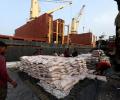
The Federation of Indian Export Organisations (FIEO) has appealed to the Reserve Bank of India (RBI) for liquidity support to Indian exporters, citing a significant increase in freight costs and extended payment cycles due to the ongoing West Asia conflict.

Stock market benchmark indices Sensex and Nifty surged in early trading session on Tuesday after India and the US agreed to a trade deal under which Washington will bring down the reciprocal tariff on Indian goods to 18 per cent from current 25 per cent.

Godrej Properties Limited (GPL) reported its highest-ever quarterly profit of 649.5 crore in Q4 FY26, a 70.13 per cent year-on-year increase, driven by record revenues and bookings. The company aims for over 39,000 crore in residential bookings for FY27 and plans to raise up to 3,000 crore through debt securities.

Indian economy is rebounding strongly providing a golden opportunity to tackle fiscal challenges decisively but steady rise in debt of the central and state governments could constrain the growth, according to a new International Monetary Fund report

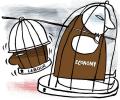
Reserve Bank of India Governor Shaktikanta Das on Friday said the country's economy is an island of stability despite two Black Swan events and multiple shocks. "In an ocean of high turbulence and uncertainty, Indian economy is an island of macroeconomic and financial stability," Das told reporters during the post policy press conference. He said the financial stability, macroeconomic stability and resilience of growth is being witnessed despite two Black Swan events happening one after the other and multiple shocks.

India will now face a lower reciprocal tariff of 10 per cent, down from 25 per cent, after US President Donald Trump announced a new global levy on items imported into America in the wake of the Supreme Court verdict against his sweeping duties on several nations.

I wonder if I can rest assured -- before the election ink on my finger fades -- that my home state is at the threshold of a better future, wonders Vice Admiral Biswajit Dasgupta (retd).

Goldman Sachs has materially lowered its earnings growth forecast for Indian companies by a cumulative 9 percentage points over the next two years.

The embassy also said that the exit must be undertaken in coordination with the mission.

A recap of the action of the fifth week of IPL 2026.

Indian benchmark indices Sensex and Nifty experienced volatility due to conflicting developments in West Asia, including reports of the Strait of Hormuz closure, which led to a rebound in crude oil prices and heightened investor concerns about supply disruptions and inflation.

Modi also said that President Trump's leadership is vital for global peace, stability, and prosperity.

If Trump wants peace with Iran, Pakistan will offer to help. If Trump seeks Pakistan's aid to spy on Iran, then too Munir will not hesitate to chip in. At the same time, the ISI will not hesitate to tip off Iran now and then, points out M R Narayan Swamy.
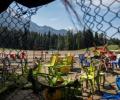
A year after the deadly terror attack in Pahalgam, India remembers the victims and reaffirms its commitment to fighting terrorism. Families of the deceased mourn their loss, while political leaders reiterate the nation's resolve to stand united against terror.

India's retail inflation, which has stayed below the Reserve Bank of India's (RBI's) 4 per cent target in recent times, is likely to remain benign in the coming months, RBI Deputy Governor Poonam Gupta said in a speech, on Friday, which was uploaded on the central bank's website on Tuesday. Headline inflation dipped to multi-year lows of around 1.5-2.8 per cent in late 2025.
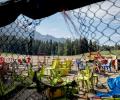
A memorial has been erected in Pahalgam to honour the victims of a terror attack last year. Security has been increased across Kashmir ahead of the anniversary.

'The West Asia or the Gulf crisis has shown that what we develop as national infrastructure when things are not as bad as they could be, we forget to plan for adversities.'
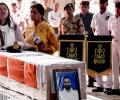
A year after the Pahalgam terror attack, the family of Lieutenant Vinay Narwal, the Indian Navy officer who was among those killed, continues to grieve and remember the young officer.
SIS Ltd, a security and facility management services provider, aims to cross Rs 20,000 crore in revenue by FY27, driven by strong double-digit growth, expansion of its service network, and a simplified regulatory framework under new labour codes, said its Group Managing Director Rituraj Sinha.

Delhi Capitals' Director of Cricket, Venugopal Rao, has acknowledged the team's need to improve their catching after costly errors led to a defeat against Punjab Kings, despite posting a high score. The team dropped six catches, giving crucial lifelines to Punjab's batsmen.

The Union Budget on Sunday proposed a tax holiday till 2047 for foreign companies that provide cloud services to customers globally using data centres located in India, signalling the government's push to make the country a major hub for AI and digital infrastructure.
The Union Budget on Sunday proposed a tax holiday till 2047 for foreign companies that provide cloud services to customers globally using data centres located in India, signalling the government's push to make the country a major hub for AI and digital infrastructure.

The Indian economy recovered from the Covid-induced downturn during 2022 and is poised for further improvement in the coming quarters though downside risks emanating from geopolitical tensions, strengthening dollar and elevated inflation will continue. The positive trajectory in the growth trend and improved fundamentals will help the nation in neutralising the impact of global headwinds which are expected to have a bearing on the country's exports in the months to come. The challenges before the government and the Reserve Bank in the new year would be to arrest inflation, check declining value of rupee against US dollar and promote private investment and growth, with a view to ensure that the country remains one the fastest growing major economies of the world.

Thousands of runners participated in Jammu's first international marathon, braving incessant rain. The event featured multiple race categories, celebrity participation, and a significant prize pool, aiming to boost tourism and promote a healthy lifestyle.

Equity benchmark indices Sensex and Nifty tumbled in early trade on Monday, with the 30-share BSE Sensex falling 1,613.09 points and the 50-share NSE Nifty plunging 495 points, as the failure of US-Iran negotiations heightened concerns of a prolonged conflict driving crude oil prices sharply higher. Track Sensex, Nifty50 movement and key market drivers for April 13, 2026.

Onestruction Inc and DataKaveri Systems have signed an MoU to establish a framework for strategic and technical collaboration in urban and built environment data exchange.

'Even if they align with the TVK now, I don't think the AIADMK leadership will completely surrender to the dominance of Vijay.'

Andhra Pradesh Chief Minister N Chandrababu Naidu laid the foundation for a USD 15 billion Google Artificial Intelligence data centre near Visakhapatnam, calling it a 'growth engine for India' and Asia's biggest such facility.

Haryana Chief Minister Nayab Singh Saini criticises the AAP-led Punjab government for political instability and lack of industrial development, while promoting Haryana's investor-friendly policies and industrial growth initiatives.
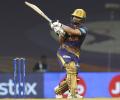
Rinku Singh's dip in form and Varun Chakravarthy's confidence issues pose key challenges for KKR ahead of IPL 2026, says Irfan Pathan.

India's private sector activity saw a significant recovery in April, driven primarily by robust growth in manufacturing output and sales, following a three-year low in March attributed to the West Asia conflict.

The International Monetary Fund head Dominique Strauss-Kahn has said the Indian economy is recovering well and New Delhi would get higher quota in the IMF board, review of which is currently underway, reflecting its enhanced economic standing.

The Indian economy's election-year syndrome cannot be ignored, says A K Bhattacharya.

What is missing in the BJP's armour is dominance over 50 percent of the electorate: Women. And this is a gamble Modi-Shah have indicated that they are willing to take, explains Saisuresh Sivaswamy.

The Indian government has convened an all-party meeting to discuss the ongoing crisis in West Asia, following Prime Minister Modi's address to Parliament on the situation and its potential impact on India.
Of course, we would still grow at 7-8 percent. We would still be smug in our achievement and say it is still better than most of the economies in the world. As for double-digit growth, let that remain only in paper.

External Affairs Minister S Jaishankar addresses the Indian Ocean Conference, expressing deep concern over the West Asia conflict and its economic repercussions on energy, trade, and food security. India calls for a swift return to peace and opposes targeting civilians and infrastructure.

Opposition leaders have criticised Prime Minister Narendra Modi's address to the nation, calling it politically motivated and a misuse of official platforms during ongoing elections.
